
In the Pipeline
Transparent Conductive Electrodes
Nano-C’s coat-ready inks and dispersions can be used in a range of high optical quality applications by using materials like single-walled carbon nanotubes (SWCNTs), silver nanowires (AgNW) or other transparent conductive materials. Examples of these applications under development are:
Flexible Displays
Solar PV Electrodes
Transparent Heaters
Transparent Antennas
Conformal Touch Interface
Specialty Coatings: ESD / RF Shielding

Carbon Compounds
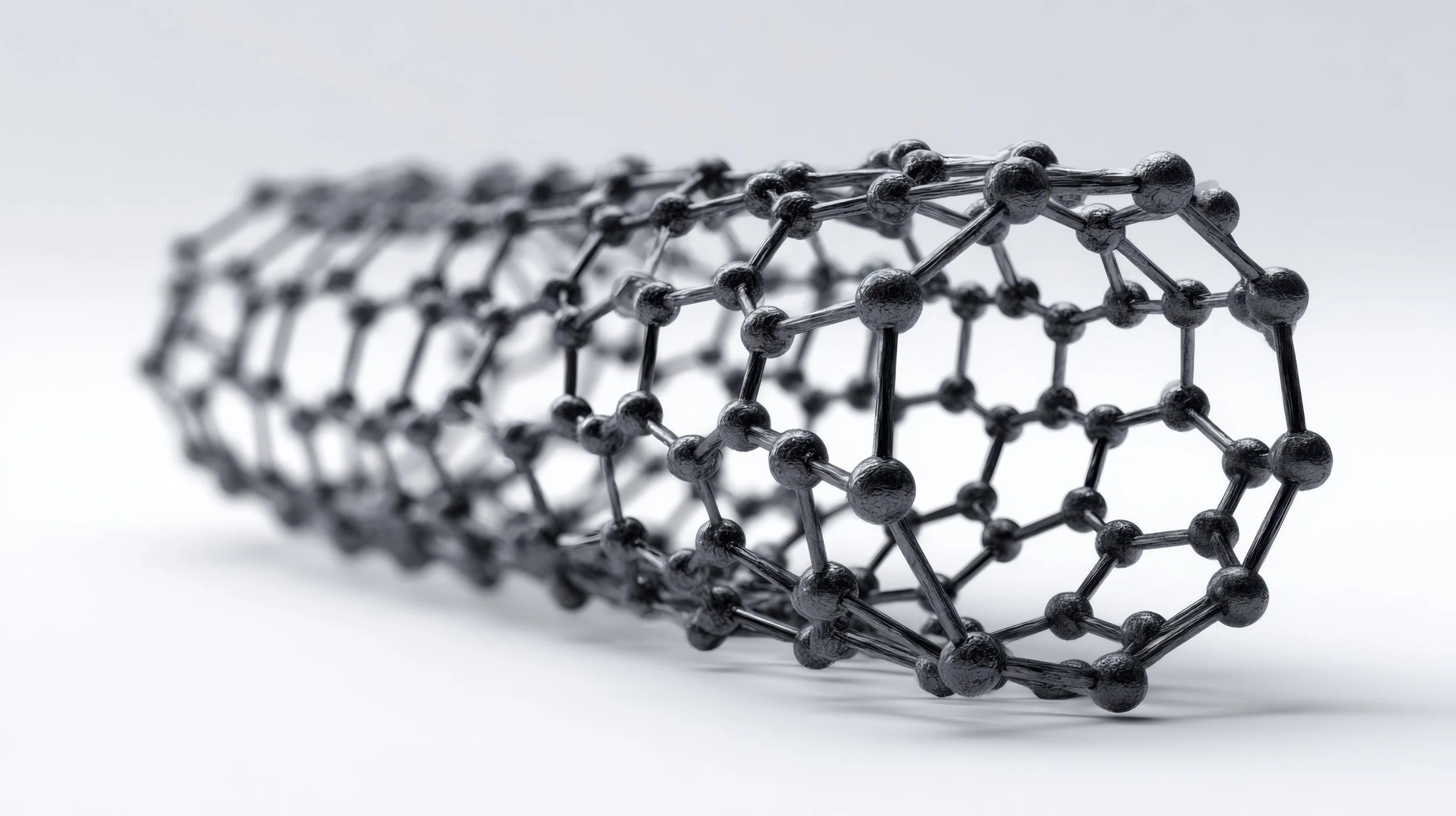
SWCNTs can be used to create advanced carbon compounds, composites, and materials. Due to their exceptional tensile strength, thermal conductivity, and electrical properties, they can be incorporated into polymers, epoxies, and other materials to enhance structural, thermal, and electrical performance in electronics, aerospace, and energy storage devices.

Soft Robotics
Single-walled carbon nanotubes (SWCNTs), used as compliant, conductive electrodes, enable a class of soft polymer transducer technologies built around three core building blocks: dielectric elastomer actuators (DEAs), also known as artificial muscles; dielectric elastomer generators (DEGs); and dielectric elastomer sensors (DESs). These soft, stretchable components enable voltage-controlled actuation, large-strain sensing, and energy harvesting in a lightweight, flexible form factor, opening new possibilities in soft robotics, tunable optics, and human-machine interaction.
Nano-C's SWCNT inks produce the stretchable conductive electrode networks at the core of these devices, delivering the sheet resistance and transmittance properties that high-performance DEA applications demand.

Organic Photodetectors
Organic Photodetectors (OPDs) are thin, flexible, solution-processable light-sensing devices that convert optical signals into electrical ones across a tunable spectral range. Their unique combination of mechanical flexibility, spectral tunability, and biocompatibility makes them well-suited for applications where rigid silicon detectors fall short, including wearable health sensors, NIR communications, medical imaging, and industrial sensing.
Nano-C develops and manufactures fullerene derivatives as n-type electron acceptors for OPD active layers, offering both standard and proprietary products. Through precise surface functionalization, Nano-C's materials are engineered to tune electronic properties, improve charge transport, and extend device lifetime.

Hydrogen Fuel Cells
Nano-C’s high performance carbon dispersions are utilized by its spin-off company Clenersys for a range of hydrogen-related applications including anti-corrosive coatings for PEM Fuel Cells.
Clenersys is developing technologies to enable high performance, economically viable solutions for the green hydrogen economy.