
Nanotech & Carbon Technology Overview
What is Nanotechnology?
“There’s Plenty of Room at the Bottom” was a lecture given by Richard Feynman a physics Professor at Caltech in 1959. He described a future where we would be able to control individual atoms. By doing so, we would be able to create new materials, discover new medicines, and in fact, create a brighter, stronger and robust future for mankind. People look back at this lecture as one of the first descriptions of what we know today as nanotechnology.
What is a nanometer?
One nanometer (nm) is 1 billionth of a meter, or 0.000000001 meters. To put that into perspective, you would have to slice a human hair 50,000 times to reach 1 nanometer. Another way to see this is to compare the size of a marble to the earth. If 1 nm were the diameter of a marble, then 1 meter would be the diameter of the earth.
Over the years, we have learned that materials behave differently at this scale; for example, metals will melt at much lower temperatures given that their surface area is greatly enhanced. Today, we see this ability being applied in 3D printers. Carbon, in its nanotube form, is 100 times stronger than steel and the basis of very high strength composite materials.
How is carbon related to nanotechnology?
Carbon is a common element. Its forms include diamond, graphite, coal, activated carbon, and carbon black. Millions of tons of these materials are used every year in applications that include abrasives, tires and water treatment, among others.
Why does it matter?
It is perhaps surprising to recognize that carbon provides a foundation for addressing some of the most serious challenges facing our world:
- Demands for alternatives to fossil fuels (energy security, global warming)
- Drive for efficiency (extend end of life, limit use of exotic materials, energy efficiency)
- Access to clean water and air (groundwater, desalination)
- Needs of an aging population (health care and advanced therapeutics)
For example, lithium ion batteries used in electric vehicles won’t work without carbon, modern-day water filtration systems need carbon to capture impurities, materials processing depends on carbon for lubrication, and synthetic diamonds used to protect materials in erosive industrial environments are made from carbon.
Nanostructured Carbon
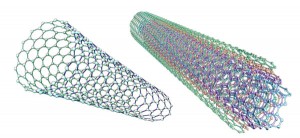
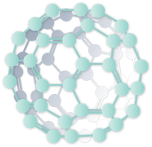
Nano-C’s innovations with these new forms of carbon are enabling its customers to:
- Shrink the size of next generation semiconductors
- Make flash memory more energy efficient
- Provide heavy-metal free electrodes for displays
- Create low-cost organic electronic and medical devices
- Develop low-cost solar cells
- Develop lighter weight/lower cost fuel cells for transportation
- Make batteries that can be printed
- Create water filters that won’t foul
- Capture free radicals before they can damage cells
- Create X-ray sensors that limit radiation exposure
They are Materials that Power Our World™.